 By hoodedrobin.com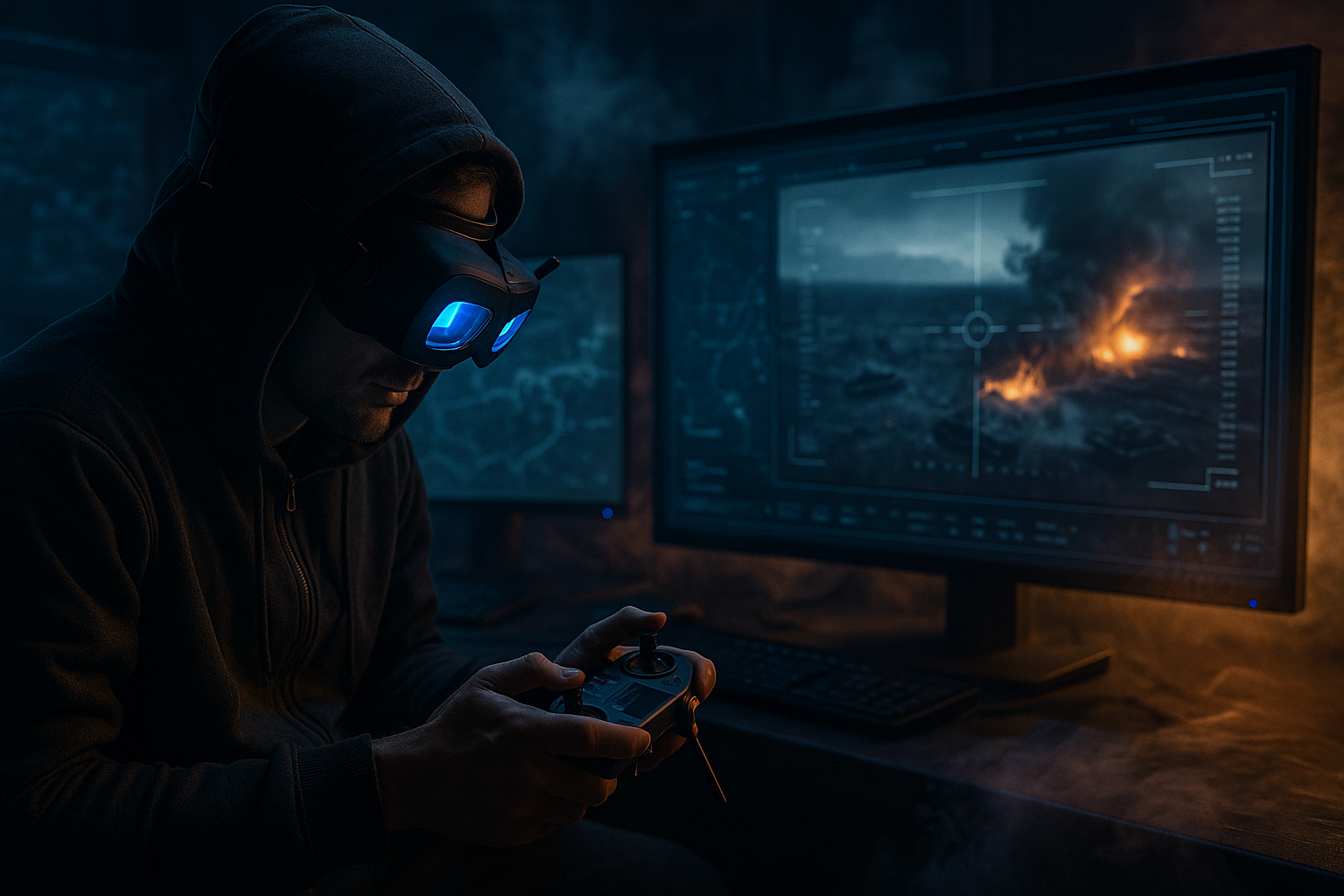
⚡ TL;DR
Ukraine’s war against Russia flipped the rules of battle.
Instead of sending men to die in trenches, they sent drones—cheap, smart, remote, and deadly.
The world just witnessed the first war fought like a video game—and it’s changing everything.
“The battlefield isn’t a place anymore. It’s a signal.”
???? The New Kind of Soldier
In a dark bunker outside Kyiv, a young man sits still—head covered, eyes behind FPV goggles glowing electric blue.
On his screen: a Russian tank.
On his controller: a small plastic drone that costs less than his phone.
With a quiet hum and a flash, the tank vanishes.
No march. No blood.
Just code, signal, and precision.
The world’s most important war is being fought wirelessly.
???? Ukraine’s Digital Revolution
When the invasion started, Ukraine couldn’t match Russia tank-for-tank or missile-for-missile.
So they changed the rules.
They turned cheap consumer drones—the same kind hobbyists use—into eyes in the sky and weapons of war.
Modified with explosives, night vision, and GPS tracking, these drones began hunting targets worth millions.
A $400 drone taking out a $3 million tank.
A volunteer tech crew taking down a trained battalion.
A country rewriting what “power” means.
“You don’t need an army when you can program one.”
???? The Drone as the Great Equalizer
Russia had numbers. Ukraine had nerds.
Engineers, gamers, and mechanics started building drones in basements and garages.
They used 3D printers for body frames, Starlink for signal links, and off-the-shelf cameras for precision.
Every strike was livestreamed in real time.
Every hit posted to social media within hours.
War became crowdsourced.
????️ Gamers in the Trenches
The most effective soldiers in this war aren’t lifelong fighters—they’re gamers.
Their training came from Call of Duty, not boot camp.
Their weapons are joysticks, not rifles.
FPV drones use the same kind of headsets found in racing simulators.
One operator controls a drone like a racing pilot on caffeine—dodging, weaving, diving.
“They don’t march. They respawn.”
For the first time, reflexes and Wi-Fi matter more than muscle and medals.
???? From Warzone to Workforce
Here’s the twist:
The same tech turning the tide of war is creating jobs everywhere.
Drone pilots are in demand for:
- ???? Film & Social Media – cinematic shots sell faster than ads
- ????️ Real Estate & Roof Inspections – faster, safer, cheaper
- ???? Agriculture & Land Mapping – drones as digital farmers
- ???? Drone Repair & Maintenance – the hidden gold mine
If you can fly it, you can monetize it.
Pro tip: Passing the FAA Part 107 License unlocks paid drone work in the U.S.
(Next post: How to Get Certified and Start Earning.)
⚖️ The Ethics of Remote War
When the pilot’s a thousand miles away—
When a strike looks like a video clip—
Where does morality fit?
This war raises questions humanity isn’t ready to answer:
- Who’s responsible when a drone kills?
- What happens when AI replaces the human pilot?
- How do nations defend against invisible swarms built in garages?
“When distance erases consequence, morality must find new ground.”
???? The Age of Logged-In Soldiers
The battlefield has moved to servers and satellites.
Power is now measured in bandwidth, not battalions.
Ukraine showed the world that war no longer needs warriors—just signal, skill, and software.
“The future soldiers won’t march—they’ll log in.”
✈️ CTA: Want In on the Drone Revolution?
Your hands don’t have to be calloused to make a living flying machines.
Your next paycheck could come from a controller, not a steering wheel.
???? Coming next:
“From Hobby to License: How to Become a Certified Drone Pilot and Start Earning.”